Monday, 11 May 2020

"Research helps police understand child to parent abuse more than ever before"

"The study aimed to explore better ways to understand child to parent violence and highlight the need to formally recognise this within law enforcement and social services. Their aim was to develop new ways to prevent such abuse in the home and provide appropriate support to families.

The results of their research have now been made public and highlight that addressing CCVAB requires a multi-agency partnership approach.

The research team found a lack of coordination and information sharing between health, mental health, education, social care and criminal justice services. This meant that the police are often unaware of known concerns or follow-on actions that have been identified but are still required to respond to calls.

In particular, they found that link between school exclusion and attendance and incidents of CCVAB in the home requires further examination. They also identified the need for adult and child safeguarding teams to work more closely in these cases.

The study also recommends that recognising and recording CCVAB is an essential first step in understanding the extent and profile of this form of abuse."
From - Link

Friday, 1 May 2020

Vicarious trauma and Burnout

Assessment tool from ProQOL.org. So how do you measure up?


Compassion Satisfaction and Compassion Fatigue Rating
https://www.proqol.org/uploads/ProQOL_5_English.pdf

Some Prevention Suggestions for Carers
https://www.proqol.org/uploads/Prevention_suggestions.doc

Wednesday, 8 April 2020

Consultancy Work - April 2020 - updated June 2020


Access available for members and non-members. 
FAQ's via the following link - 

FAQs - Working Online With Children and Young People

"During this period of isolation, change and loss, access to online counselling and support services is likely to be crucial to many children, young people and families. The profession is changing on a daily basis, adapting to new challenges and providing services that may focus more on building resilience, keeping children and young people safe and checking well-being."

"While this guidance does not replace the experience and knowledge gained through appropriate, formal training, it will help you make informed choices and decisions that are in the best interests of your young clients."

"Comprehensive answers to most of these questions will require additional knowledge, learning and expertise gained through your practice, training and supervision.
Replacing face-to-face contact with digital platforms may suit some children, but not others, so we need to continue to be mindful of individual assessment and choice."

"We'll continue to amend and update our FAQs in line with current good practice guidance."

Sunday, 12 January 2020

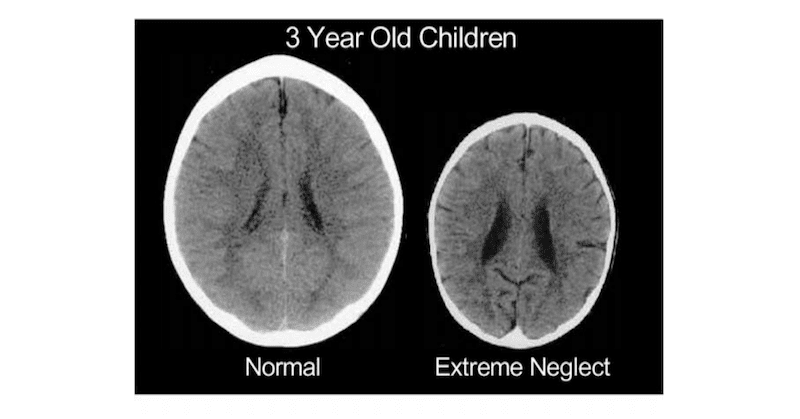
How Childhood Trauma Changes Our Hormones, And Thus Our Mental Health, Into Adulthood

Early life adversity is a major risk factor for the development of psychological and behavioural problems later in life. Higher rates of depression, suicidality, anxiety disorders, post-traumatic stress disorder, and aggressive behaviour have been reported in adults who experienced childhood maltreatment.
Traumatic childhood events also contribute to increased drug use and dependence. Initiation of drug-taking behaviour begins at a much younger age in those who’ve experienced childhood trauma. Exposure to stressful events in childhood can increase the impact of stressful events throughout life. Add divorce or unemployment to childhood trauma and someone can be more likely to develop psychological disorders or addiction.
(Australian article)

LINK

Friday, 18 October 2019

OCTIA 2019 – Were You There?

Unfortunately, I could not make the time to travel to Manchester but, as delegates can attend OCTIA online, I chose to do just that …. And felt that I got my online fee’s worth.
On the OCTIA website the day promised …
“The 2019 conference theme is focused towards those online counsellors, therapists and health care professionals who are engaging with their clients and service users using the full range of online platforms and media. There'll be the opportunity to share how we care for our clients, but how we care for ourselves and each other as fellow professionals. We are stronger together!” https://www.octia.co.uk/
Working as a therapist or supervisor in the online world can sometimes feel isolating, bewildering and frustrating. These are negatives amongst the many benefits. The passion emanating from  today’s speakers was strong. Where organisations are often struggling to maintain a steady flow of funding, it was clear from today that everyone present had a deeply held belief in the difference that online therapy can make to clients of all ages. I felt that we are finally entering a time where online therapy  does not need to feel “second best” to face to face therapy. Instead it is well recognised that some very vulnerable clients would not access counselling face to face.
There was an interesting discussion around qualifications for working online. The age-old questions of “are they necessary?” As always, my thoughts turned to “we can never know what we do not know”. I might be biased as I have tutored in online counselling and supervision over the years, but I still remember just how much I did not know when I trained. Those moments of “OMG … !” Todays speakers clearly agreed with the need for appropriate training and good support.
A discussion around providing online therapy from volunteer counsellors was summarised well by Catherine Betley who believes strongly that no counsellor should be asked to work voluntarily. The attributes that they bring need to be respected. I agree and wonder whether the world of online therapy has many therapists passionate about the benefits of online therapy and would even work voluntarily to make it accessible. I know that this is why I worked voluntarily for an online organisation in the past.
My sense is that conferences like OCTIA will help ensure that ethical and safe online practice for the sake of clients will always be the standard at a time when online therapy can still be heard of as “the stepping-stone into face to face therapy”. Putting clients first, we need to stamp this out as being inaccurate and disrespectful of online therapy at a time when online therapists can often be faced with having to make a decision to hold the emotional needs of a very complex client . The passion of many online therapists comes from their desire to meet the needs of clients where they can be best met – whether that is sitting in their bed struck with grief or too full of shame and guilt to sit with a therapist, directly, face to face.  I can’t remember who said this today, but it is  “horses for courses”. The choice of face to face or online therapy can only continue to benefit clients.
Thank you to the OCTIA team – see you next year.
Jan Stiff
CYP Director ACTO